I recently had the chance to look back at some of the Plastics Division’s environmental stewardship programs, and I’m struck by how our engagement on the marine litter/plastic waste issue has grown. And it also has become clear that much of what we accomplished was accelerated by partnering with others.
Some of our earliest efforts focused on education to avoid pellet spills, which we did (and still do) in partnership with the Plastics Industry Association. Other early efforts included designing the plastic recycling codes and encouraging communities to add plastic recycling to their existing systems which were initially designed for paper, metal, and glass. A few years later we worked with clean water groups to support passage of legislation empowering the California State Water Board to do more in protecting against plastic pellet losses.
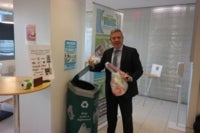
In 2007 — with understanding growing about the amount of plastic that enters the ocean and the ways it gets there — we reached out to several California-based NGOs to share perspectives and get their views on how our industry could help address the problem. (The answer: improve recycling and recovery, help generate better science, and work better in partnerships.) Two years later we launched a novel partnership with California State Parks, Keep California Beautiful, and other local groups to deploy hundreds of recycling bins to heavily trafficked beaches managed by California State Parks.

Continuing our view that partnerships can facilitate meaningful progress, we sought out ever more diverse partners. Today we support, work with or partner with groups like The Recycling Partnership, Closed Loop Partners, and others. In addition, we support Keep America Beautiful, in particular their work to understand and identify the root causes of litter through rigorous scientific research and behavior analysis.
Even our policy work benefits from collaboration. We have worked with the EPA on their Trash Free Waters program, and with NOAA on their Marine Debris Program. We supported bipartisan legislative language for the Save Our Seas 2.0 Act, the RECOVER Act, and the RECYCLE Act.ACC supported authorization for $500 million in matching federal grants to improve recycling infrastructure, programs, and education; and language supporting research to repurpose used plastics into transportation infrastructure such as roads and bridges. And more recently North American plastics manufacturers aligned on ambitious circular economy goals that all plastic packaging will be reused, recovered, or recycled by 2040, and we are working on an investment and policy road map to achieve that ambitious goal.
The issue is of course also global, and it soon became clear that we need to coordinate globally to strengthen our response to plastic waste and better understand ocean plastic and to curb the flow of plastic litter into our environment. Our colleagues at PlasticsEurope agreed, and together we created the Declaration of the Global Plastics Associations for Solutions on Marine Litter, which was launched at the 5th International Marine Debris Conference (5IMDC) in 2011. Under that Declaration, plastics industry associations from around the world committed to take concrete steps to help prevent marine litter in six specific work areas. At its launch we had commitments from 47 associations from 29 countries to work on about 100 projects. Over the years the number of participants has grown to 75 organizations in 40 countries working on more than 355 projects around the world.
And, we’ve been instrumental in building new organizations designed to work together to support the goal of ending plastic waste in the environment, and joining groups where we could add value. For example, we led the development of the World Plastics Council (WPC), a global platform engaging executives from the world’s leading resin producers, which today has 24 members from around the globe. And, we became a steering committee member of the Ocean Conservancy’s Trash Free Seas Alliance, a multi-stakeholder forum identifying opportunities for cross-sector solutions that drive action and foster innovation.
We were instrumental in developing and launching the Alliance to End Plastic Waste, a CEO-led, cross value chain initiative of more than 45 companies from around the world, which is committed to deploying $1.5 billion over five years to put in place waste management and processing systems in areas where we can make the most meaningful difference.
So where does that leave us? To be sure, there are challenges ahead: There are signs the economy is slowing; several countries are changing whether/how they trade in scrap materials; and the cost of building or modernizing waste infrastructure is daunting. Yes, complicated and maybe difficult policy choices are coming. Still, this industry has shown time and again that it is up to the challenge of building a true circular economy for plastics that matches our ambition and commitment. Looking back has informed my forward view, leaving me optimistic that we will build the new circular economy models for plastics. I’m convinced that principled views, grounded in solid data, will deliver the technologies and material innovation that earn broad public support. Now is the time to lean forward with confidence — adjusting quickly when we fail, and scaling quickly when we succeed. Big change happens when smart, visionary leaders come together with a commitment to innovate. That’s where we are today, so I look forward to seeing what tomorrow brings.