As we approach America’s 250th anniversary, the milestone offers an opportunity to reflect on the industries, innovations, and workforce that have powered the nation’s growth and to consider what will sustain it for the next century in an increasingly competitive global economy.
For 250 years, American progress has been driven by ingenuity, entrepreneurship, and a commitment to solving challenges through science. Among the chemistries that have quietly enabled this progress, formaldehyde stands out as one of the most essential and widely used building blocks in modern manufacturing.
Though rarely visible to consumers, formaldehyde-based chemistries are foundational to the materials and products that support everyday life. Valued for their strength, durability, and ability to create high-performing, cost-effective materials at scale, these chemistries are used in hundreds of applications across housing, transportation, healthcare, agriculture, energy, and industrial manufacturing enhancing food safety, supporting national defense, driving economic growth, strengthening supply chains, and reinforcing American competitiveness in global markets.
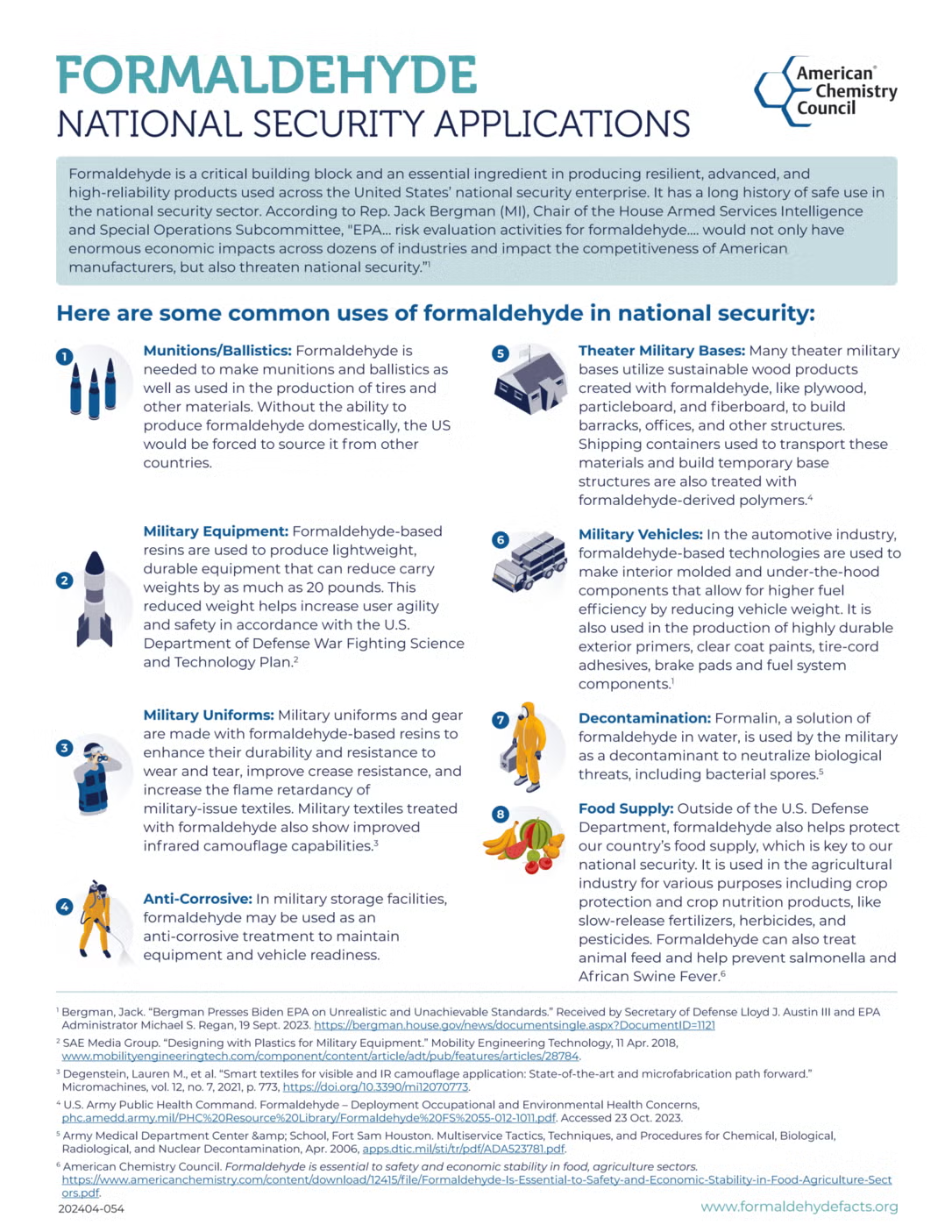
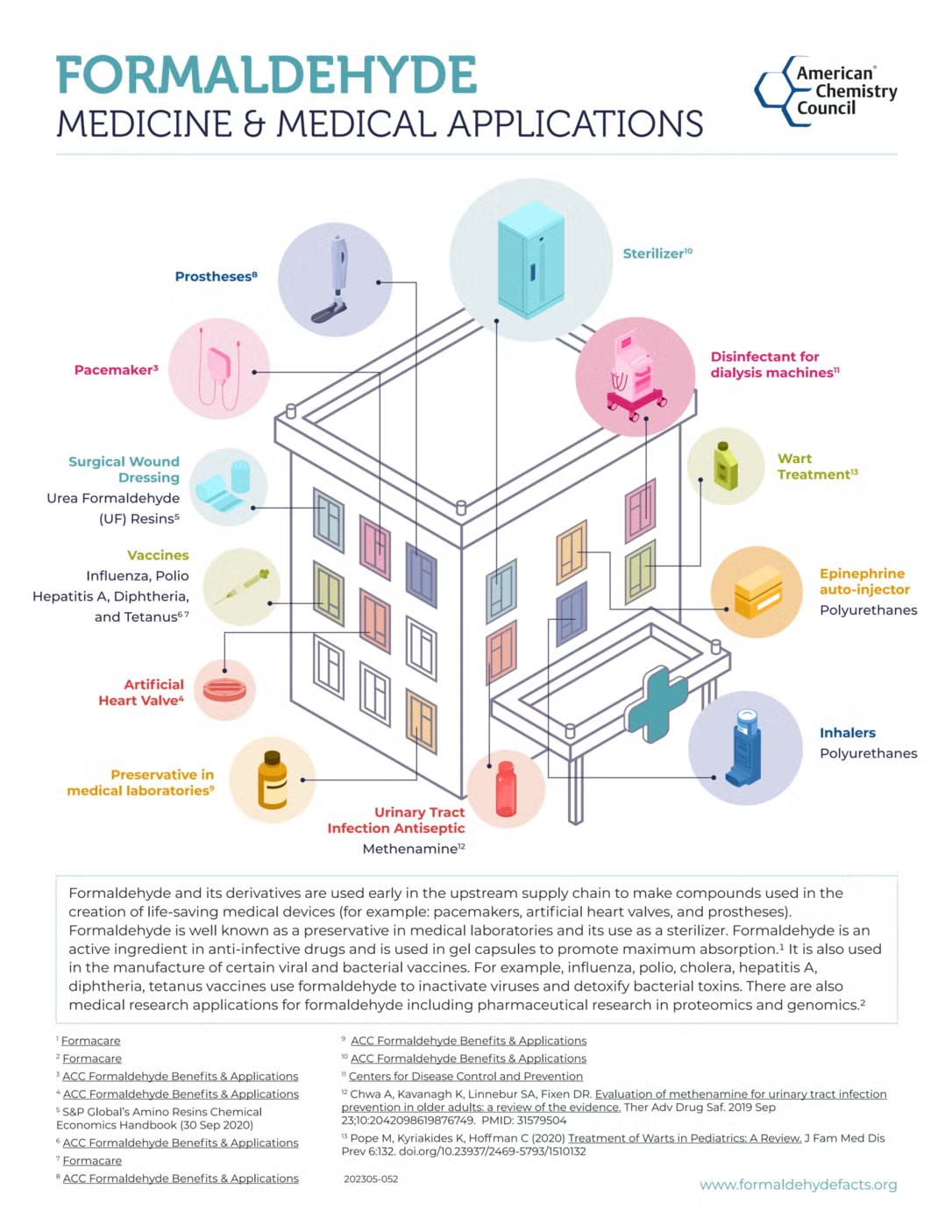
Formaldehyde’s Contribution to Jobs, Output, and Competitive Strength
The impact of formaldehyde extends far beyond the facilities where it is produced.
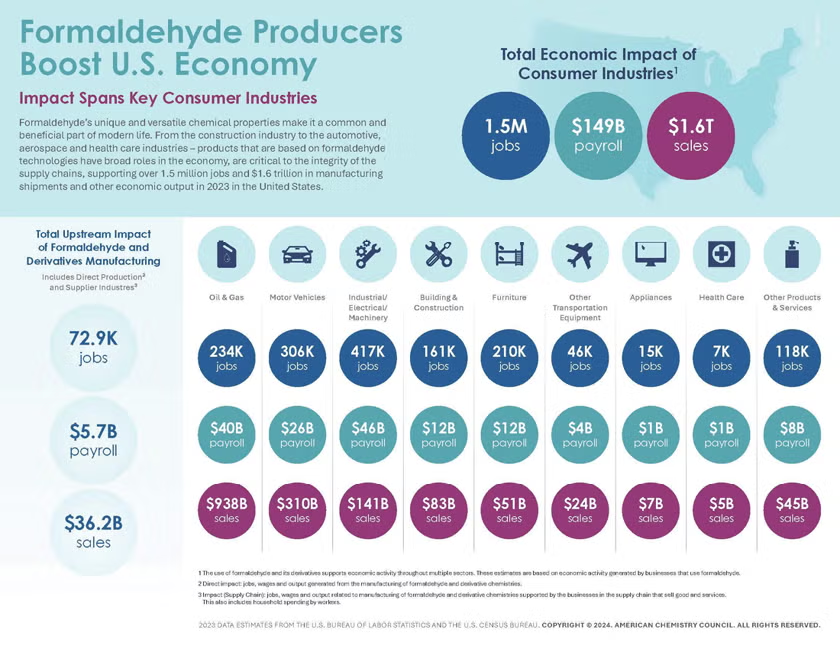
Formaldehyde-based products supported more than 1.5 million American jobs and contributed approximately $1.6 trillion in manufacturing shipments and economic output in 2023. These figures reflect the role of formaldehyde as a critical upstream input in complex supply chains that power industries across the U.S. economy.
Because formaldehyde is used to manufacture essential materials from engineered wood to automotive components, it supports employment across construction, transportation, manufacturing, logistics, and small businesses. Just as importantly, reliable access to these inputs helps ensure that U.S. manufacturers can compete globally, produce domestically, and avoid disruptions that could shift production overseas.
This broad economic reach underscores how foundational chemistries like formaldehyde contribute not only to economic output, but also to the resilience and competitiveness of American industry.
Formaldehyde in Housing and Construction Materials
Formaldehyde-based resins play a central role in the materials Americans rely on to build homes, workplaces, and community infrastructure.

These resins are used to manufacture composite and engineered wood products, including plywood, particleboard, medium-density fiberboard, and laminated beams. Such materials are widely used in cabinetry, flooring, wall systems, countertops, and structural components -- applications where strength, stability, and long-term performance are critical.
Formaldehyde-based chemistries are particularly valued for their strong bonding properties and resistance to heat and moisture, which help ensure durability in demanding environments. In addition, engineered wood products enable more efficient use of timber resources by incorporating recycled and recovered wood fiber maximizing material value while reducing waste.
These performance and efficiency advantages also support competitiveness by helping keep construction costs manageable, supply chains efficient, and U.S.-produced materials viable in both domestic and international markets.
Formaldehyde in Transportation and Industrial Manufacturing
Formaldehyde is equally important in enabling performance and innovation across transportation and industrial applications.
In the automotive sector, formaldehyde-based resins are used in molded components, coatings, adhesives, brake systems, and fuel system parts. These materials help improve durability and heat resistance while supporting lightweight design—key factors in enhancing fuel efficiency, reducing costs, and helping U.S. manufacturers remain competitive in a rapidly evolving global market.
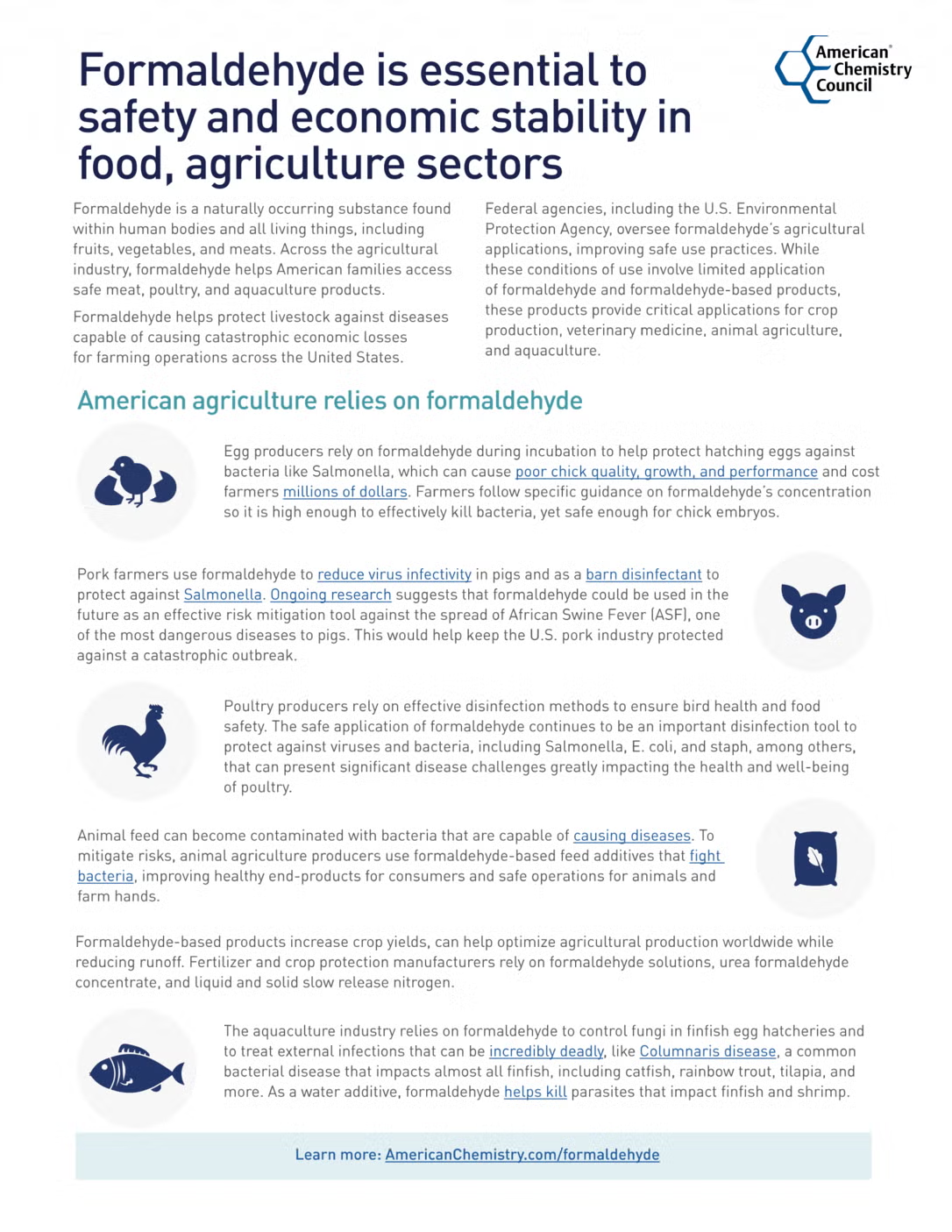
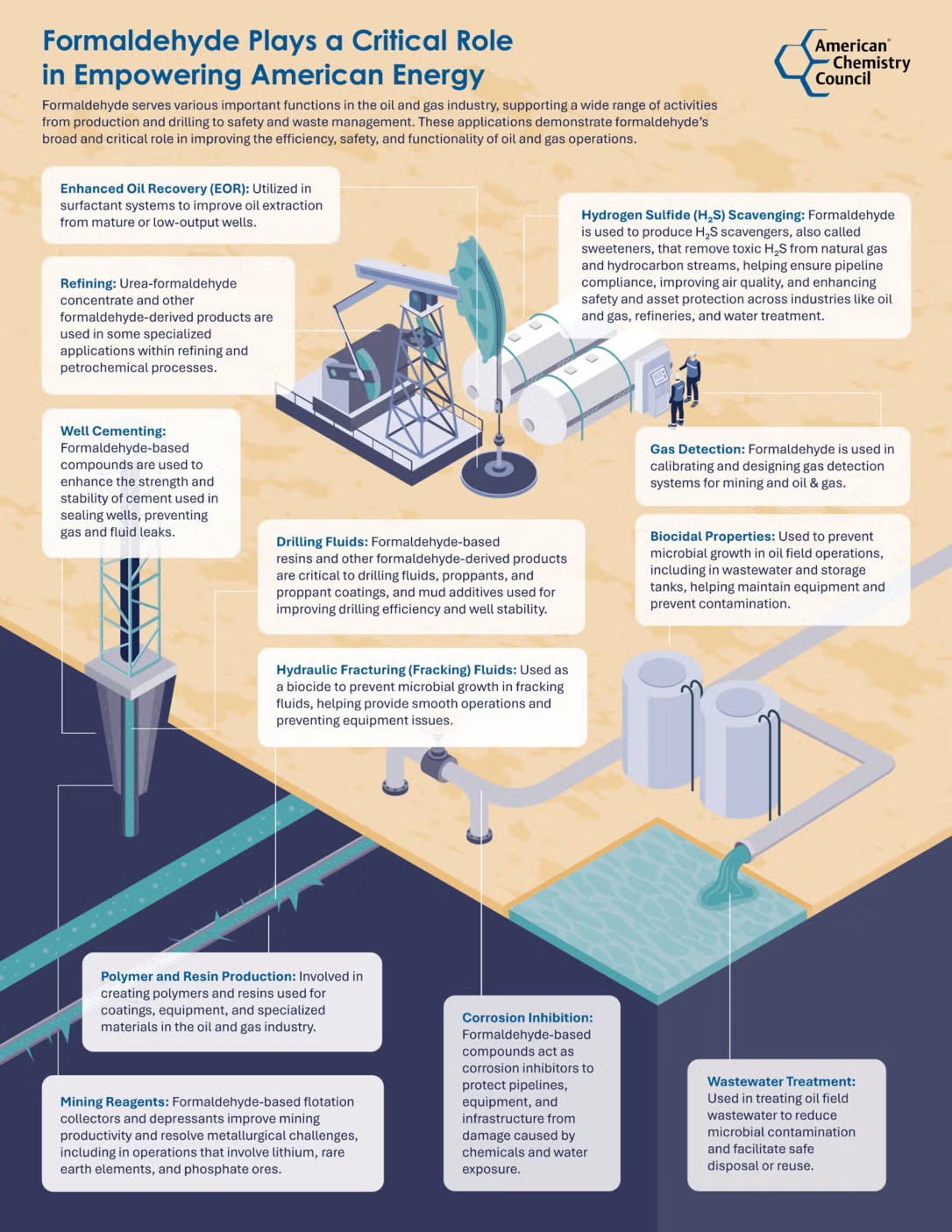
Formaldehyde-based chemistries also support critical sectors such as energy and agriculture. In the oil and natural gas industry, formaldehyde-based products are used in applications that help maintain operational efficiency and support domestic energy production. In agriculture, formaldehyde plays an important role in crop protection, animal health, and fertilizer production, helping improve productivity while supporting a reliable and resilient food supply. These applications further demonstrate how foundational chemistries contribute to industries that are essential to America's economic strength, resource security, and long-term competitiveness.
Beyond automotive uses, formaldehyde-based technologies are integral to aerospace components, industrial equipment, healthcare materials, and numerous other manufacturing applications where performance, consistency, and cost-effectiveness are essential. In many of these applications, formaldehyde-based materials provide specialized properties that are difficult to replicate with alternatives.
This combination of performance and scalability helps ensure that American manufacturers can innovate, maintain high standards, and compete effectively with international producers.


Looking Ahead: Competitiveness for the Next 250 Years
America’s first 250 years have shown how foundational technologies and materials can drive economic progress and global leadership. America's story has always been one of turning scientific understanding into practical progress. Formaldehyde, a molecule that exists naturally across the universe and serves as a building block for increasingly complex chemistry, has likewise become a building block of American manufacturing. Over the past 250 years, U.S. ingenuity has harnessed fundamental chemistry to create industries, jobs, and technologies that improve everyday life. Looking ahead, continued investment in science, innovation, and advanced manufacturing will allow these foundational building blocks to continue to support American prosperity for generations to come.
Formaldehyde-based chemistries have long been part of that foundation enabling the production of durable materials, supporting efficient resource use, and helping U.S. industries compete globally. Continued access to these essential inputs will be critical to strengthening domestic supply chains, supporting innovation, and preserving America’s competitive edge in manufacturing.
As policymakers, industry leaders, and communities look toward the next 250 years, maintaining a strong manufacturing base will depend on decisions that reinforce science-based policies, investment in industrial capacity, and confidence in the materials that make modern production possible.
Formaldehyde will remain a key contributor to the materials, infrastructure, and products that power economic growth and innovation and to the competitiveness of American manufacturing in the decades ahead.
America’s manufacturing story is still being written, and formaldehyde will continue to play an essential role in shaping what comes next.